


Sound Play
Building Confident Readers
through Phonemic Awareness and Phonics
Designed as a supplemental program for Kindergarten and First Grade
Provides systematic instruction in core phonemic awareness skills
Uses active, game-based learning to engage young students
Teaches sound–symbol correspondences through gestures, visuals, and motor memory
Easily integrates with a core reading program for added practice and reinforcement
What’s included?

Who is it for?
Beginning readers who require instruction in phonemic awareness and the early code
Supplemental program for Kindergarten and First Grae

Why does it work?
76 whole-group lessons
10-15 minutes per lesson
Continuing progress monitoring
Plans for differentiated learning

What’s included?
Sound Play Kit
Teacher’s Manual
Black Line Masters
Teaching Cards
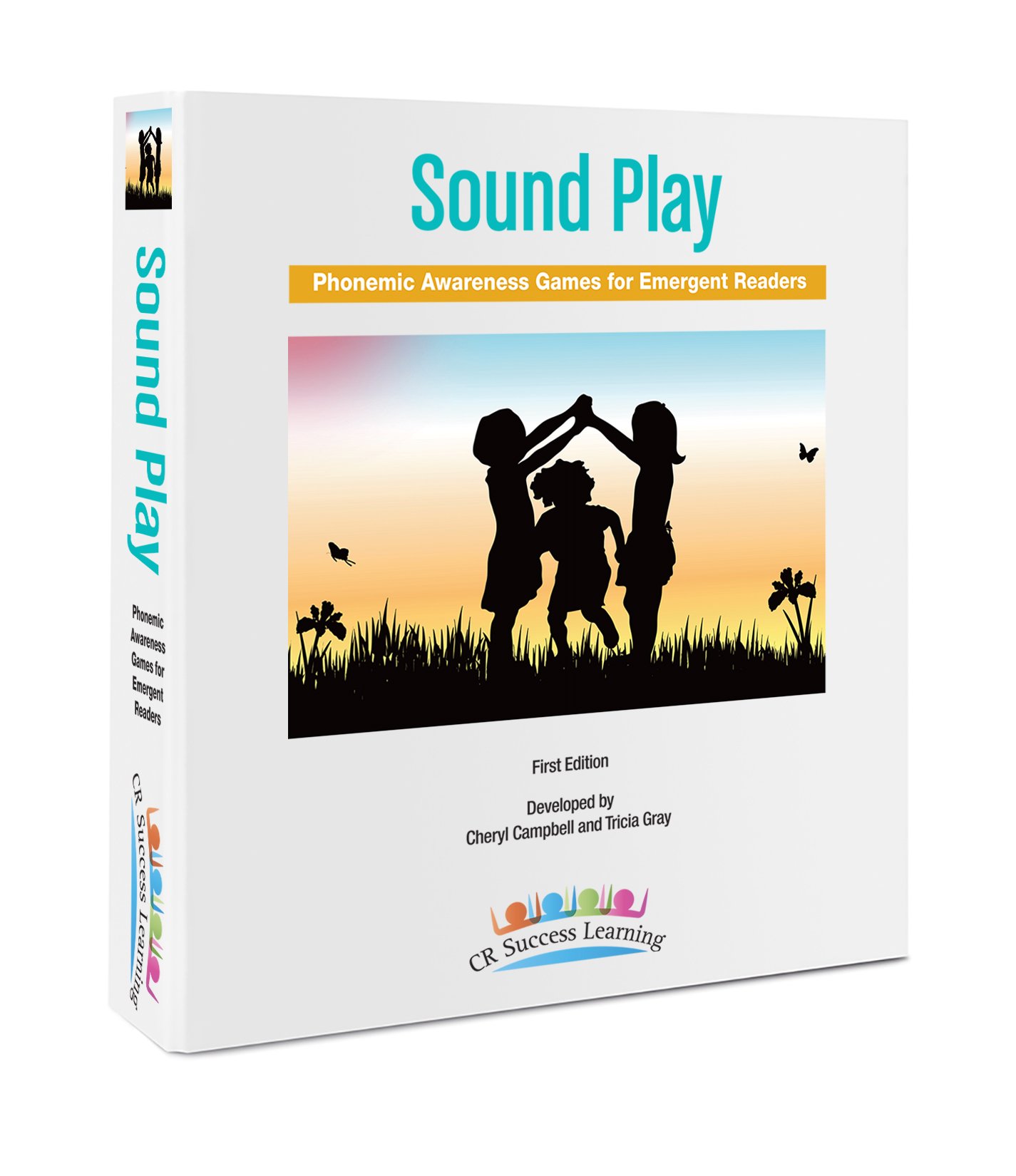
Phonemic Awareness Games for Emergent Readers
The Sound Play Binder includes teacher’s guide, black line masters and five sets of cards to use with the lessons.
Sound Play has six Modules of Instruction. Each Module’s lessons feature developmentally appropriate activities that are fun and engaging. Progress monitoring for each Module is provided so that teachers can be confident that students are successful before moving to the next area of instruction.
Sound Play’s Modules are sequenced in the following ways:
• Module 1 – Isolating Beginning Sounds first with continuous consonant sounds, then with clipped consonant sounds
• Module 2 – Isolating Ending Sounds first with continuous consonant sounds, then with clipped consonant sounds
• Module 3 – Segmenting Sounds in two-phoneme words and then in three-phoneme words. Before segmenting sounds in CVC words, students practice isolating medial vowel sounds.
• Module 4 – Blending Sounds in two-phoneme and then in three-phoneme words.
• Module 5 – Reading VC and CVC words using one-breath blending
• Module 6 – Adding, Removing and Substituting Phonemes (advanced Phonemic Awareness)